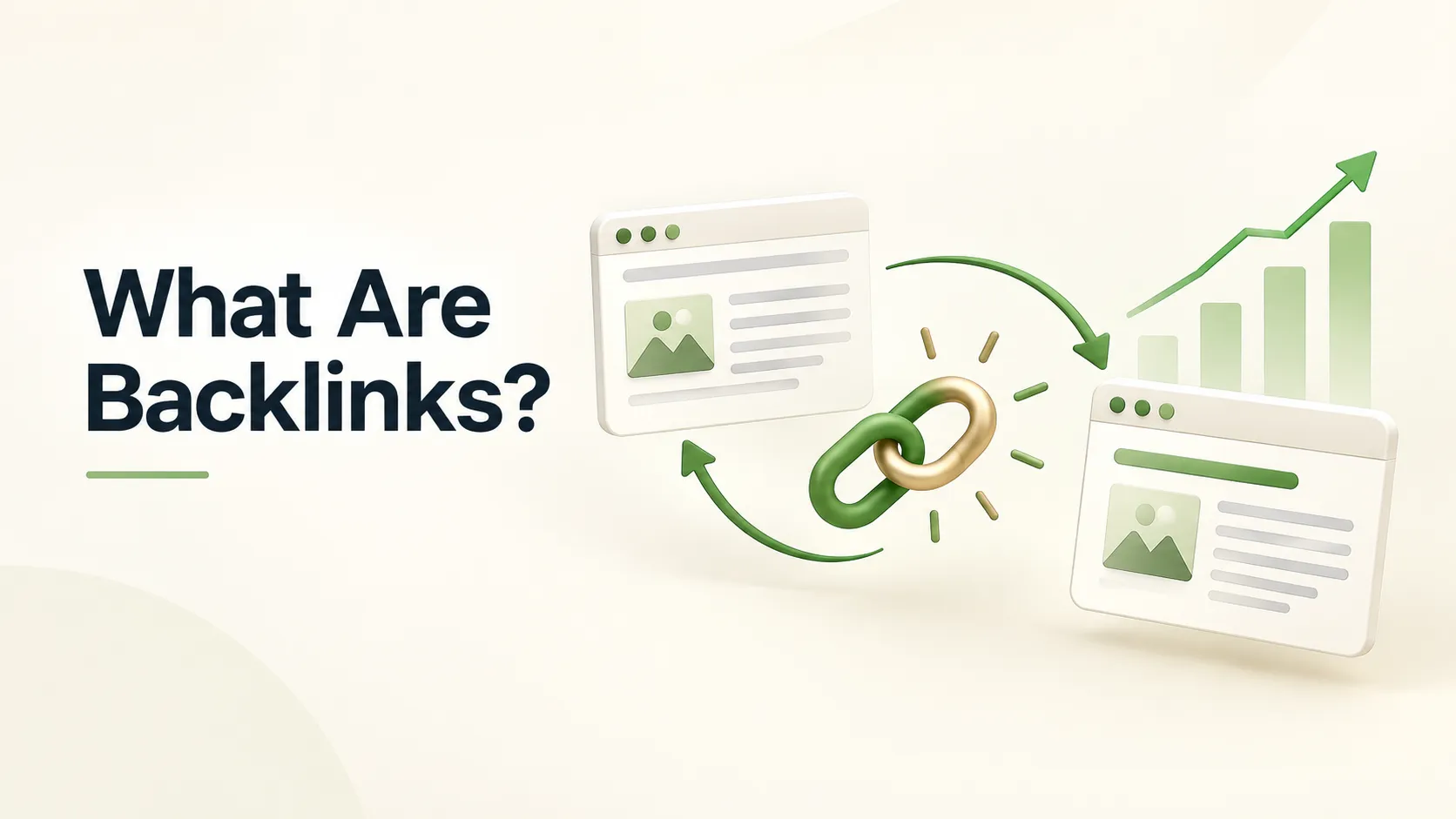
Let's say you wrote a helpful article about SEO. Another website reads it, finds it valuable and links to it from their article. So you have acquired a backlink.
Backlinks are the links from one website to another, also called inbound or incoming links.
For instance, you write an article on Scale Converge about how to increase website rankings. Then a digital marketing blog decides to mention your article in one of their posts. So they link to your resource to invite their readers to read more about SEO. You have got a backlink!
A backlink plays a critical role in terms of off-page SEO as it establishes a connection between one web address and another and impacts how search engines function. However, there is one particular detail that you need to understand – increasing the former’s quantity is not necessarily correlated with higher ranks, so it is important to assess who will be linking to you and why.
Why Are Backlinks Important in SEO?
Having backlinks may enhance your rankings in SERPs, but its significance stretches beyond SE.
They can help engines find your content
Engines crawl web pages using links; therefore, having a website which Google already indexes as a backlink can help it find your page. For instance, you have just published a new blog and another website links to it. This link can "lead" Google crawlers to your new content. But it does not mean that Google will index this page, which we will discuss below. They help engines understand your content's relevance.
The Page Rank algorithm, which Google uses, relies in part on the link structure of web pages – the more pertinent links your resource has, the higher it appears in the list of search results. Great links into a page are not the sole ranking factor, the quality of the content and how it satisfies the search intent still remains a very important factor. So you need to optimize not only for backlinks, but also for other factors, because one inbound link is not enough for the first Google search page.
They can drive traffic to your website
Not every visitor to your website comes via Google.
If an established marketing website recommends a guide from Scale Converge on keyword research, those who trust this source will follow the link and visit our blog. Some of them might become your regular readers or even clients. This is known as referral traffic. And one more reason why a backlink from a relevant website matters is that it can get your resource in front of a new audience.
They can increase brand awareness.
Since other networks mention your company, there is a greater potential to reach the target audience. The presence in the sources and articles related to the niche increases brand’s visibility and chances to appear in front of the unknown users. Therefore, it is essential to build backlinks to boost the awareness about the brand by spreading the information among the new visitors. However, it is critical not to seek mentions to improve the backlinking report but try to get attention and provide value.
What Makes a Good Backlink?
Imagine that a respected marketing website links to your SEO guide while discussing a related topic. Meanwhile, an irrelevant source added your link to its page with random links. Both acquired backlinks, but the first one is much more likely to benefit your rankings.
When analyzing a backlink:
Relevant: Does the linking website/page relate to your niche? (A link to an SEO guide on a digital marketing blog is relevant but a link from an entertainment website to your business guide is not.)
Context: Is the link placed in a relevant part of the page? A natural backlink appears in useful content; hence, it has a higher chance to help you. If the page is created solely to place links to other resources, then it is not a good sign.
Website quality: Does the website provide useful information and has a decent audience? Always look at the source: check if it does have valuable content and who its audience is, not only at its SEO score.
Anchor text: What text did the website use for the hyperlink? Ideally, it should be the text which the reader sees: for instance, if the link says "read our guide to technical SEO", then "guide to technical SEO" is the anchor text. It provides context for both users and search engines.
Placement: Does the linked page have a natural reason to mention your website or article? Spammers often use dofollow links in random websites to artificially increase their PageRank: avoid such obvious backlink building techniques.
Overall, there is no universal metric which can tell you if a backlink is good or not. Always consider its context, relevance, and purpose.
What Are the Different Types of Backlinks?
When consulting with different SEO specialists, you might have come across such terms as editorial backlinks, guest posts, do-follow links, no-follow links. But what do they actually mean?
Editorial backlinks
They are created when another entity (website) refers to your article/guide as a valuable resource. You have the option for the writer to include your link when he/she is referring to a specific topic. You cannot ask a website to link to your website. The only option you have is to provide a resource that another entity will choose to reference.
Guest post backlinks
A guest post is when you write an article for another website. Hence, a guest post backlink appears when you publish a post on someone else's blog. It usually helps you get new traffic: the posts are written for a new audience. But the problem is that some spammer websites publish only guest posts with backlinks to their pages. Google marked links as link spam, so avoid link schemes. Always choose relevant websites to publish your articles and focus on providing value to their audience.
Resource page backlinks
A few websites have resource links pages: links to helpful tools, articles, guides on the subject. If a website owner finds a helpful guide from you, he or she may want to add it to their page. For instance, a digital marketing blog can have a page with SEO learning resources. And a well-crafted beginner's guide might become a helpful addition to it.
Dofollow, no-follow, sponsored and UGC links
Dofollow, no-follow, sponsored and UGC are html attributes that determine Google's ranking for a link.
Dofollow: A link that doesn’t have a particular HTML attribute.
No-follow: Instructs search engines not to follow it, and to treat it as a recommendation.
Sponsored:: Indicates that the link is part of an advertising, sponsorship, or paid placement campaign.
UGC: Stands for User Generated Content, meaning that this is a link from forums, blog comments, or some other kind of public user-to-user messaging.
But remember, engines interpret them differently, as well. While a no-follow link isn't followed by Google bots, a do-follow link is. Despite that, even a no-follow link can direct traffic and brand visibility to your website and a sponsored link might just pop up in ads instead.
How Can You Build Backlinks as a Beginner?
You do not need to start buying backlinks or emailing hundreds of websites to get one. First, focus on creating useful content which other website owners would like to share on their pages.
Create useful content
First of all, get your own helpful content ready. Articles which answer real questions or provide a solution to a problem will get you backlinks. If a website has a tutorial on how to use WordPress, then its audience will look for more resources on the topic. And, since your article is well-crafted and explains the topic clearly, they will want to share it on their websites. But what if your article is not a tutorial but an in-depth discussion of technical SEO? Those who seek an explanation of these concepts will turn to your resource.
Find relevant websites
Find some websites which discuss the same topic as your article. You will want to contact these sources: their audience will be interested in your content, and therefore, there is a possibility that they will want to share it. But always check what content the website provides before contacting it: if you get an idea of what this blog is about, you will see if they would benefit from your article.
Personalise your email
Never send the same email message to each of the webmasters, try to make it individual to each, telling them how you think your post would be great for them. Make sure you include the niche of the website and what benefits your resource can bring them and leave it up to them if they want to use the content you have offered to them.
Share your expertise
Participate in comments and answer people’s questions. You can also recommend people resources and direct them to your website, if they have found satisfactory answers to their questions and a helpful guide. Obtain a backlink to your website, if you are an expert in a particular field and can give a decent answer.
Check your existing backlinks
Google Search Console has a handy feature called Links. It displays a list of websites which are linked to you, the pages on these websites, and the pages on your website which got backlinks. You can also use such SEO tools as Ahrefs and Semrush to get information about your backlinking profile.
But not every email you send will get a positive response. Some ignore you, and some decline your request. It is a normal process: try sending emails to different websites, check if they have an interest in your article.
Which Backlink Practices Should You Avoid?
There are certain questionable practices which Google does not support. And even if they might help you get higher rankings, it is better to avoid them.
Never buy links that will pass ranking juice, never use service to build links, never do reciprocal link exchanges, don't leave keyword injected links in unrelated comments, and don't make crappy content website just to get backlinks. There is also spam in guest posting too: few folks spam their way into getting more backlinks by publishing their article onto different websites with keyword injected anchor text.
Google Web Search team also mentions in its guidelines that paid promotions should have proper HTML attributes: sponsored or nofollow.
Yet, it is also important not to get discouraged by every low-quality backlink. Spam links with very low authority scores can also appear in your backlink profile. But before removing it, check its context: is there a real chance that this link can drive traffic and benefit your rankings? Ahrefs and Semrush provide more information about your backlinks. If you feel that your profile has spam, you can always disavow it. But avoid removing backlinks just because there are many of them, and you want to move on.
Final Thoughts
It takes time, effort, and a good strategy to build backlinks. Earn links from websites relevant to your niche, and your website will benefit from the increased visibility.
If building backlinks is not your thing, you can always hire the services of professional SEO company that will help you with link prospecting, outreach, and developing an effective backlink building approach to ensure growth in the long-term.